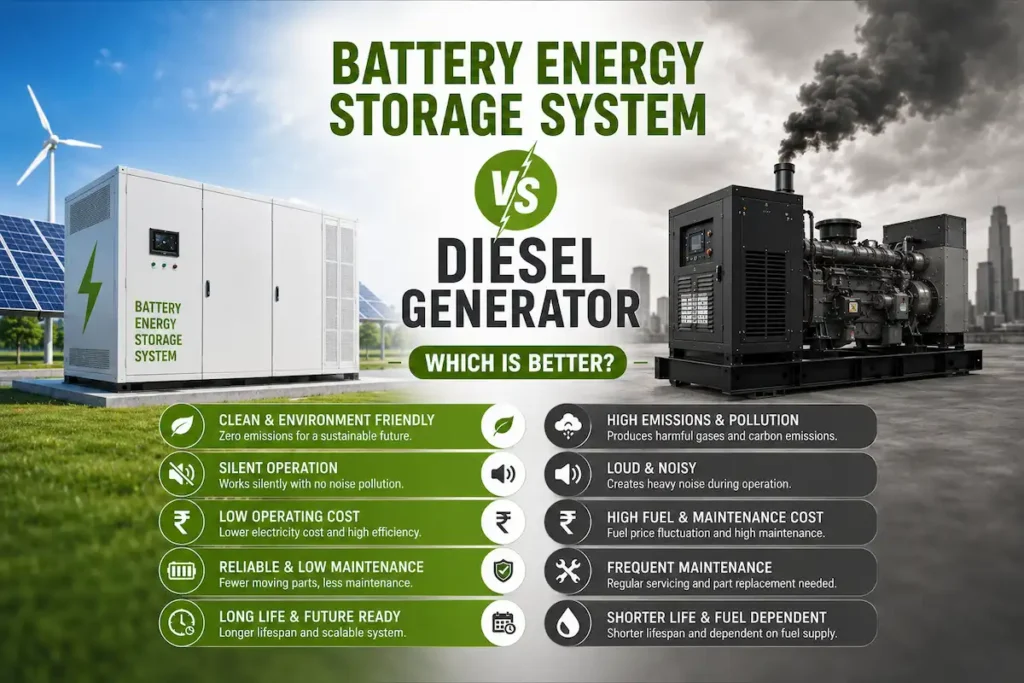
TNPDCL is advising HT consumers to use DG during peak hours, 7–10 PM. Why not choose BESS?

When Peak Hours Push You Toward DG

Choose BESS Instead

For industries and commercial facilities looking to manage peak-hour power requirements, reduce diesel dependence and make better use of solar energy.

Store energy when it’s available.

Use it when your business needs it most.

If You Are Running DG During Peak Hours, This Is Worth Looking At.

For an industrial business, evening power requirements can become expensive.

You may already be dealing with:

  • High peak-hour electricity consumption
  • DG fuel costs
  • Regular DG maintenance
  • High electrical demand
  • Solar energy that isn’t available after sunset
  • Critical loads that need continuous power

What if some of that energy could simply be stored and used later?

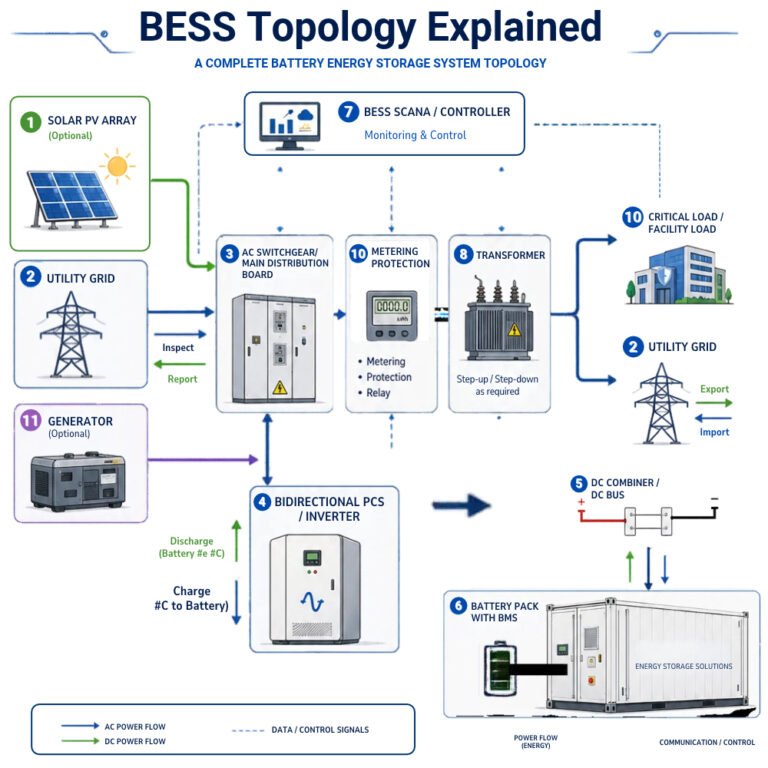
That’s where BESS — Battery Energy Storage System comes in.

How Much Is Your DG Really Costing You?

Let’s take a simple example.
Your factory has a 500 kW load and needs it for 3 hours.
500 kW × 3 hours = 1,500 kWh
If your DG operating cost is approximately ₹16/unit:
1,500 × ₹16 = ₹24,000
That’s approximately ₹24,000 for one evening.

At 25 operating days:
₹6,00,000/month
And the actual cost of DG operation can also include:
Fuel + Maintenance + Lubricants + Servicing + Emission-control requirements

Now the question is:
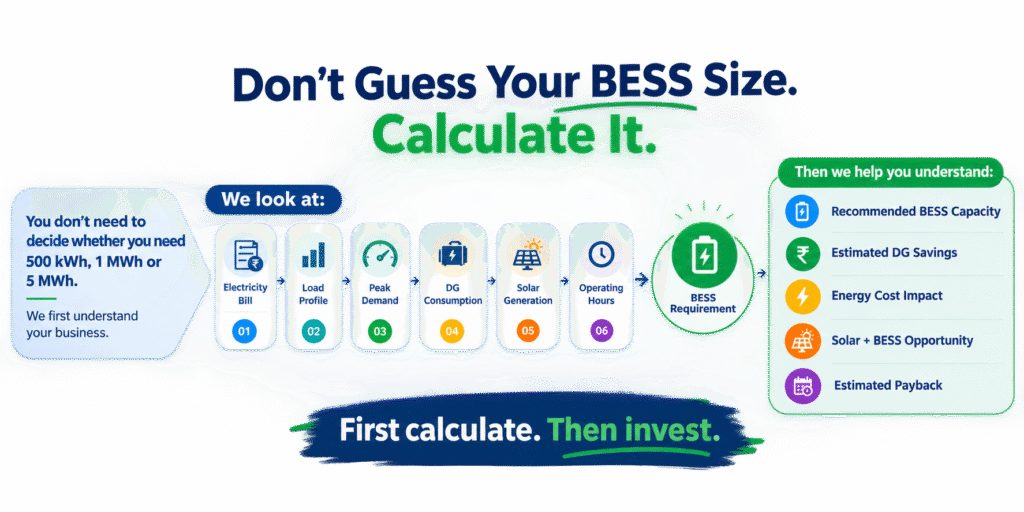
Can BESS reduce your dependence on DG during these hours?

Illustrative example only. Actual savings depend on your electricity tariff, load profile, DG efficiency, fuel price, operating hours and BESS configuration.

Scroll to Top